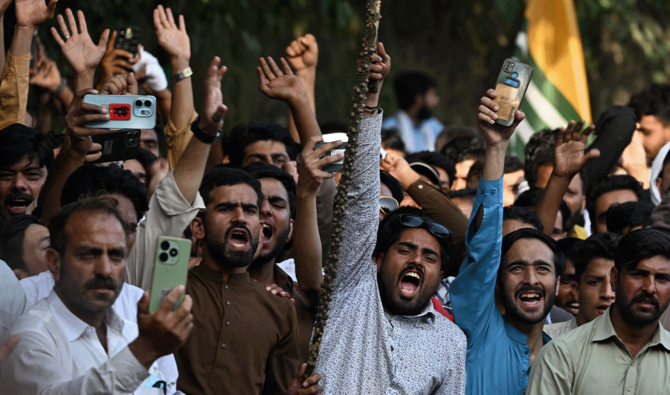
Pakistan-administered Kashmir is once again witnessing widespread public protests. The region, which has long remained a focal point of political and strategic competition between Islamabad and New Delhi, now appears to be moving toward renewed instability due to economic hardships, political grievances, and demands for regional rights.
According to recent reports, protests continue in various parts of Kashmir against the government of Pakistan and in support of the economic and political rights of the Kashmiri people. In some areas, clashes have also occurred between protesters and security forces, resulting in casualties.
Background of the Protests
The roots of the current unrest in Kashmir trace back to the economic crisis of 2023. At that time, rising flour prices, increased electricity bills, and limited access to basic necessities led to widespread public protests across the region.
Following these protests, local committees and civil movements emerged to defend public rights. In subsequent developments, these movements expanded, forcing the government of Pakistan to promise some economic relief measures. However, many Kashmiris believe that the core issues remain unresolved.
A New Challenge for Pakistan
The current situation in Kashmir comes at a time when Pakistan is already facing multiple internal challenges. These include armed activities by Baloch separatist groups in Balochistan, protests and resistance from the Pashtun Tahafuz Movement (PTM), ongoing tensions between the government and political opposition, protests by supporters of the Pakistan Tehreek-e-Insaf (PTI), security threats from the Tehrik-i-Taliban Pakistan (TTP), and severe economic difficulties. All these factors are increasing pressure on Islamabad.
Analysts believe that if the protests in Kashmir expand further, Pakistan may face an additional front of pressure—one that would further complicate the government’s ability to manage its political, security, and economic crises.
Regional Dimensions
Any development in Kashmir is not purely an internal matter. The region remains a central point of the long-standing conflict between Pakistan and India. Therefore, the continuation and expansion of protests may also have wider regional implications.
Political observers argue that India may take advantage of the current situation in Kashmir to strengthen its political position and attempt to highlight public dissatisfaction in Pakistan-administered areas on international platforms.
What Does the Future Hold?
The ongoing protests in Kashmir indicate that economic grievances can gradually transform into political demands. If the legitimate concerns of the local population are not addressed in a sustainable and practical manner, these movements may expand further and turn into a long-term political and security challenge for Pakistan.
At present, the key question for Islamabad is whether the government will be able to control the situation through dialogue, economic reforms, and political measures, or whether the Kashmir protests will evolve into another serious crisis alongside Pakistan’s existing internal challenges.