
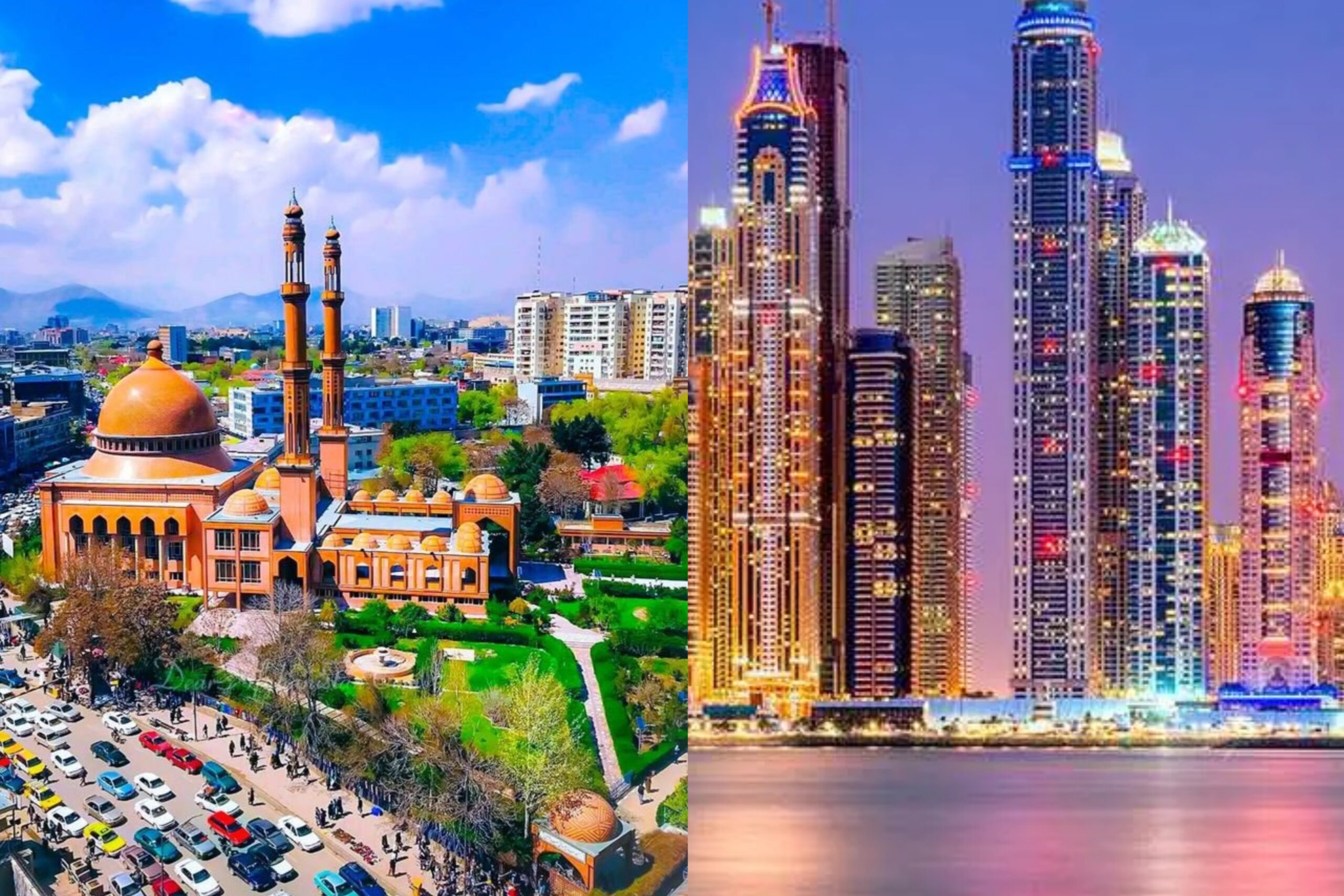
The United Arab Emirates (UAE) has expressed strong interest in continuing its long-standing support for Afghanistan by investing billions of dollars across various key sectors.
Over the past several decades, the UAE has played an important role in humanitarian, development, and infrastructure cooperation with the Afghan people. Emirati assistance has largely focused on humanitarian relief, healthcare, education, transportation, aviation, and social services.
Haji Obaidullah Sadrkhail, head of the Afghan Business Community in the UAE, stated that the country is keen to invest billions of dollars in Afghanistan’s electricity, agriculture, and commercial ports sectors. According to him, approximately 300,000 Afghans currently live in the UAE, with total Afghan capital there estimated at around $50 billion.
Sadrkhail added that the UAE has already invested nearly $500 million in the management and organization of two Afghan ports. Previously, the UAE also played a significant role in the rehabilitation, equipping, technical support, and logistics of Kabul International Airport. This included financial and technical assistance for the repair and maintenance of runways, radar systems, and other technical infrastructure. Emirati companies have also supported ground services, security, and operational management at the airport at various stages.
Healthcare and Emergency Assistance
In the healthcare sector, hospitals and clinics named after Sheikh Zayed have been built or equipped, particularly in Kabul and eastern provinces. These facilities include specialized centers for maternal and child healthcare. The UAE has also provided medical supplies, equipment, mobile health teams, and emergency medical assistance during wars and natural disasters.
Education and Academic Support
In the education sector, dozens of schools, religious seminaries, and educational facilities have been constructed or renovated with UAE financial support. One of the most notable projects is Sheikh Zayed University in Khost Province, where thousands of students are currently enrolled in various academic fields.
Over the past 20 years, the UAE has also supplied schools with textbooks, furniture, and educational materials. Additionally, Afghan students have periodically received scholarships to pursue higher education in the UAE, enabling many to complete their studies there.
Infrastructure, Water, and Power Projects
In terms of infrastructure and development, the UAE has funded the construction of public buildings, roads, bridges, government facilities, and other public infrastructure projects. In the water and energy sectors, drinking water wells, water supply networks, and small-scale electricity projects—especially in rural areas—have been implemented with Emirati support.
Humanitarian and Social Support
The UAE has provided extensive humanitarian assistance, including food, tents, winter supplies, and cash aid to displaced Afghan families. The country has also delivered emergency relief during earthquakes, floods, droughts, and other natural disasters. Religious and charitable projects, such as the construction and renovation of mosques and support programs for orphans, widows, and impoverished families, have also been funded.
The UAE is considered one of Afghanistan’s key regional partners. Its assistance has extended beyond humanitarian aid to include vital sectors such as healthcare, education, infrastructure, and aviation. Despite political changes in the country, Emirati support continues to play a significant role in addressing the needs of the Afghan people.
New Investment in Power Generation
As part of ongoing cooperation, a UAE-based company named HMM has recently expressed interest in investing in gas-to-power electricity generation projects in Afghanistan. Company representatives held comprehensive discussions with officials of the Taliban-led government regarding power generation projects.
According to officials, HMM Group has announced its readiness to invest in the production of 1,000 megawatts of electricity in the initial phase, aiming to support Afghanistan’s energy self-sufficiency.