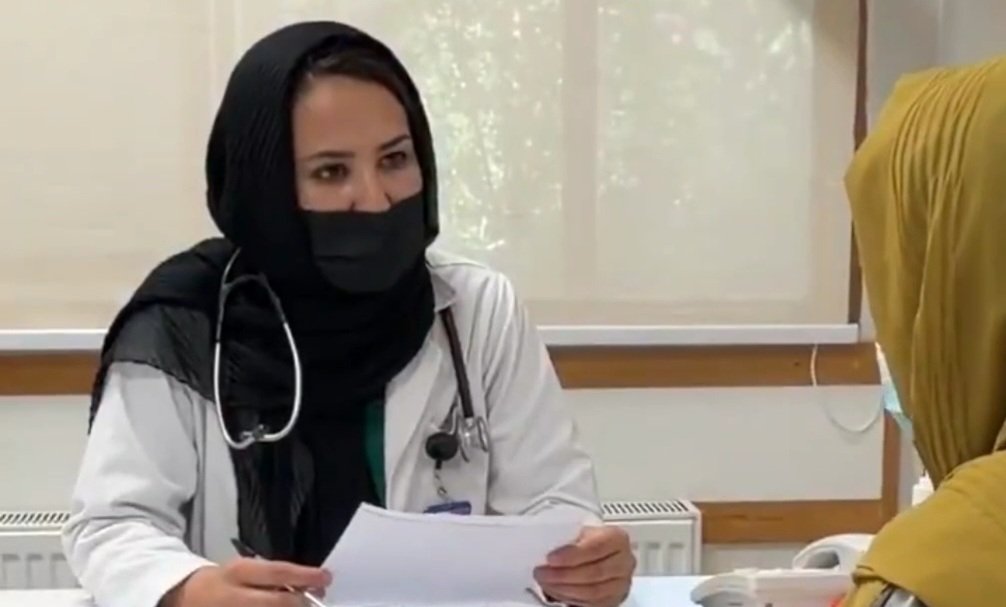
Residents of various provinces in Afghanistan are complaining about the shortage of female and qualified doctors in many health centers across the country, along with the lack of medicines and poor road conditions leading to medical facilities. According to them, these problems, especially in remote areas, are having serious negative impacts on the lives and health of female patients.
Many residents say that although female doctors have been appointed in some urban and central areas, little attention has been given to remote districts and rural regions of the country in this regard.
They are calling on relevant health authorities and the Ministry of Public Health to take serious and urgent steps to expand healthcare services, recruit more female doctors, and provide better facilities for the population.
A resident of Barmal district in Paktika province, Bakhtullah, says: “A while ago in our area, a woman lost her life during childbirth due to the absence of female doctors and a nearby health center.”
Another resident of Helmand province, Samiullah, says that the shortage of female doctors in rural health centers has caused female patients to fail to receive timely treatment.
He adds that the lack of ambulances for transporting patients to provincial centers and the poor condition of roads often cause patients to lose their lives before reaching medical facilities.
Samiullah says: “In many districts there are no professional female doctors. On the other hand, some male family members do not allow female patients to be examined or treated by male doctors, which creates serious problems for women.”
He calls on the government and health institutions to take practical steps to recruit qualified female doctors in remote areas of the country.
A resident of Kunar province, Hazrat Ghulam, says: “There is no nearby health center in our area. We have to walk several kilometers to reach a clinic. Another problem is that there are no female doctors there, and when women go for treatment, they face many difficulties.”
He adds that in many cases male family members do not allow women to be treated by male doctors, leaving many women suffering from treatable illnesses without access to healthcare.
Hazrat Ghulam urges health officials to appoint female doctors in districts and villages so that women can confidently seek medical care when needed.
Some social activists also confirm these issues, saying that roads in many provinces are in poor condition, making it extremely difficult to transport patients during rainy and snowy seasons.
They say that although female doctors are present in some central areas, there is still a shortage of female healthcare workers in remote districts, which continues to create serious challenges for women.
Meanwhile, some young people say that although mobile health teams have been active in some areas in recent years, the shortage of medicines and lack of medical staff remain major problems.
They call on the Ministry of Public Health to strengthen healthcare centers in remote areas, appoint female doctors, and address the shortage of medicines.
According to the Ministry of Public Health, thousands of female doctors, nurses, midwives, and other healthcare workers are currently employed in the country, and efforts are ongoing to expand healthcare services across all regions based on need.
It is worth noting that in many provinces of Afghanistan, female patients face difficulties in receiving treatment. Not only is there a shortage of female doctors in many remote areas, but social and cultural restrictions also prevent women from accessing timely healthcare services.
In addition to health challenges, some citizens consider restrictions on girls’ education one of the main reasons for the shortage of female healthcare workers. They believe that the continued suspension of secondary and higher education for girls will further reduce the number of female doctors, nurses, and midwives in the coming years, worsening the situation for female patients.
A resident of Logar province, Nabi Ahmadzai, says: “If girls are not given access to education and higher studies, the country will face a serious shortage of female doctors and healthcare workers in the future.”
He adds that even now, female patients in many areas face difficulties due to the absence of female doctors.
Many Afghans and social activists are calling on the government to reopen schools and universities for girls so that they can complete their education and contribute as qualified professionals in healthcare, education, and other essential sectors.
They emphasize that girls’ education is not only an educational issue but is directly linked to the country’s healthcare system, social development, and economic growth. According to them, resuming girls’ education would be an important and long-term step toward solving the shortage of female healthcare workers.
Health experts believe that continuing girls’ education and expanding medical training opportunities could reduce the shortage of female healthcare staff in the coming years and improve women’s access to healthcare services.